Basic Information
| Item | Detail |
|---|---|
| Full name | Ernestine Lillian Moten |
| Also known as | Ernestine Ross; Ernestine Ross Jordan |
| Born | January 27, 1916 |
| Birthplace | Allenville (also rendered Allensville), Alabama, USA |
| Died | October 9, 1984 (age 68) |
| Place of death | Southfield, Michigan, USA |
| Cause of death | Cancer |
| Parents | Rev. William Moten; Isabella (Caldwell) Moten |
| Spouses | Fred Earl Ross (m. March 1941; later divorced); John Jordan (later marriage) |
| Children (6) | Barbara (Ross-Lee), Diana, Rita, Arthur “T-Boy,” Fred Jr., Wilbert “Chico” |
| Resting place | Woodlawn Cemetery, Detroit, Michigan |
| Notable for | Matriarch of the Ross family; mother of Diana Ross |
Early Years and the Path North
Ernestine Lillian Moten entered the world on January 27, 1916, in rural Alabama, a place recorded as Allenville (sometimes rendered Allensville). She was born into a large, faith-rooted household, the daughter of the Rev. William Moten and Isabella (Caldwell) Moten. As the youngest of many children, Ernestine learned early the choreography of big-family life: resourcefulness, patience, and the subtle authority that comes from listening more than speaking.
In the decades when the Great Migration reshaped Black American life, Ernestine joined the stream of families seeking steadier work and opportunity in the industrial North. Detroit was a magnet. It held jobs, community, and—crucially—a future for growing families. Those who remember her speak not of headlines, but of habits: steadiness, warmth, and the soft gravity of a matriarch who could hold a home together through thin seasons and thick.
Marriage, Motherhood, and a Household of Six
Ernestine married Fred Earl Ross in March 1941. Over the years that followed, their household filled with six children. Diana—born in 1944—was the second of those six, coming of age in a Detroit neighborhood where church choirs, school halls, and block parties formed the scaffolding of community life.
Family lore recalls that when Diana was seven, Ernestine fell ill for a time. The Moten grandparents stepped in, as grandparents do, knitting the family safety net even tighter. That shared caregiving, typical of extended Black families of the period, left a lasting imprint: cousins became like siblings, and grandparents shaped character alongside parents.
The Ross home buzzed with the energy of a big household—homework, chores, and the everyday music of daily life. Out of that rhythm, a star would rise, but the soil was family. Ernestine was the quiet spine of that story.
Names That Echo: Children, Grandchildren, and Great-Grandchildren
Across generations, Ernestine’s life echoes through names familiar to music lovers, film fans, and medical professionals alike. Her family tree carries both artistic acclaim and public service.
Family Snapshot
| Name | Relation to Ernestine | Notability/Notes |
|---|---|---|
| Barbara Ross-Lee | Daughter | Trailblazing physician and medical educator |
| Diana Ernestine Earle Ross | Daughter | Music icon and actress; born 1944 |
| Rita Ross | Daughter | Sister within the Ross family circle |
| Arthur “T-Boy” Ross | Son | Songwriter; collaborated in the Motown era |
| Fred Ross Jr. | Son | Brother within the Ross family circle |
| Wilbert “Chico” Ross | Son | Brother within the Ross family circle |
| Rhonda Ross Kendrick | Granddaughter | Singer and actress (Diana’s daughter) |
| Tracee Ellis Ross | Granddaughter | Actress and entrepreneur |
| Chudney Ross | Granddaughter | Author and entrepreneur |
| Ross Arne Naess | Grandson | Producer and photographer |
| Evan Ross | Grandson | Actor and musician |
| Raif-Henok Emmanuel Kendrick | Great-grandson | Rhonda’s son |
| Leif Naess | Great-grandson | Ross Naess’s son |
| Indigo Naess | Great-granddaughter | Ross Naess’s daughter |
| Jagger Snow Ross | Great-granddaughter | Evan Ross’s daughter |
Ernestine’s role as matriarch is perhaps best understood not through a single achievement but through the flourishing of her descendants: a physician-leader, an international entertainer, actors, musicians, entrepreneurs. The branches spread wide; the roots remain deep.
Later Years, Illness, and Passing
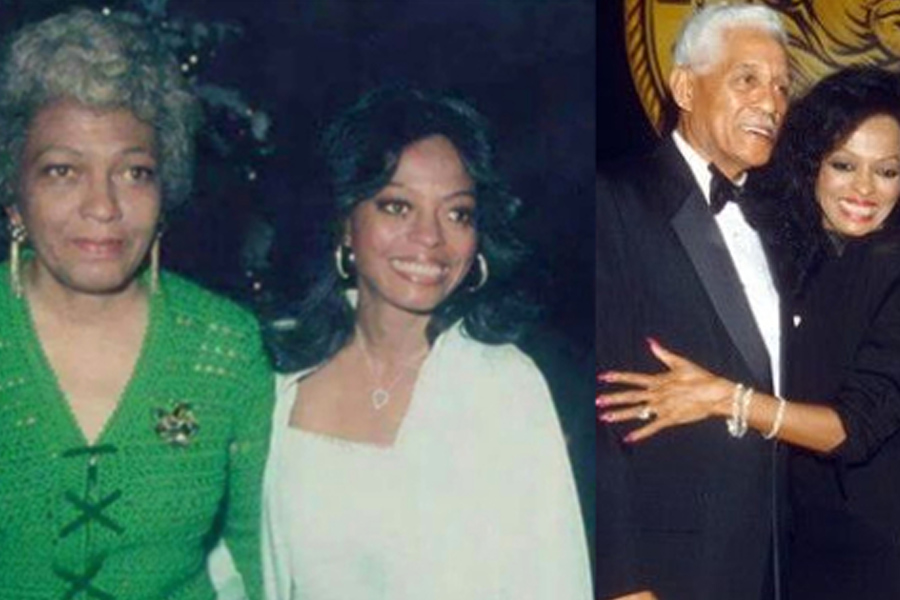
Later in life, Ernestine used the surname Jordan, reflecting a marriage to John Jordan after her departure from Fred Ross. By the early 1980s, she had settled in Southfield, Michigan. On October 9, 1984, she died at home at age 68 after an illness with cancer. Her funeral services were private, in keeping with a life that stayed mostly outside the glare of the spotlight. She was laid to rest at Detroit’s historic Woodlawn Cemetery, where the city’s cultural memory is etched in stone.
Work, Calling, and a Reputation Built at Home
Some family histories describe Ernestine as a schoolteacher, a vocation that would suit the patience and quiet authority for which she was remembered. Public accounts from her era, however, emphasize her family role more than a formal career. Like many women of her time—especially in large families—her work was both everyday and foundational: budgeting, guiding, correcting, comforting, celebrating. If the public stage belonged to her daughter, the backstage belonged to Ernestine.
Her legacy can be measured in the intangibles: the discipline that honed talent, the encouragement that steadied young ambition, and the moral clarity that kept a big family moving in the same direction. She was not the song; she was the tuning fork.
The Detroit Years and the Architecture of Belonging
Detroit’s neighborhoods were the frame for Ernestine’s adult life: church on Sundays, school concerts midweek, gatherings around kitchen tables with coffee brewing and the latest school victories or setbacks tumbling into conversation. In that world, Ernestine cultivated a sense of belonging that extended beyond bloodlines—neighbors who were “like family,” a web of support that proved essential as her children charted their futures.
The city’s music scene hummed in the background. While Ernestine was not its public face, she was part of the city’s cultural heartbeat—one more parent cheering from folding chairs, one more home where practice ran late, one more voice saying, “Keep going.”
A Concise Timeline
| Date | Event |
|---|---|
| January 27, 1916 | Born in Allenville/Allensville, Alabama |
| March 1941 | Married Fred Earl Ross |
| March 26, 1944 | Birth of daughter Diana Ernestine Earle Ross in Detroit |
| 1940s–1950s | Raising six children in Detroit; period of illness supported by extended family |
| Later years | Marriage to John Jordan; known as Ernestine Ross Jordan |
| October 9, 1984 | Died at home in Southfield, Michigan, age 68 (cancer) |
| Mid-October 1984 | Private funeral; burial at Woodlawn Cemetery, Detroit |
What Makes a Matriarch
Ernestine’s life offers a reminder: not every influential figure lives under bright lights. Some build their legacies in living rooms and school drop-off lines, where patience and presence do their quiet work. Her children and grandchildren have filled stages and screens, but the scaffolding of those achievements was assembled at home—with routines, expectations, and the kind of love that teaches resilience.
She bridged eras—from the rural South to an industrial city; from segregation’s constraints to Motown’s possibilities. Her wisdom lived in transitions: when to nudge, when to shield, when to let go.
FAQ
Who was Ernestine Moten?
She was a Detroit-based matriarch, born in Alabama in 1916, best known as the mother of Diana Ross and the anchor of a large, close-knit family.
When and where was she born?
She was born on January 27, 1916, in Allenville (also recorded as Allensville), Alabama.
How many children did she have?
She and her first husband, Fred Ross, raised six children, with Diana being the second.
Did Ernestine Moten have a public career?
Some family histories describe her as a schoolteacher, but her public profile centered on her role as a mother and matriarch.
Whom did she marry?
She married Fred Earl Ross in 1941 and later married John Jordan, using the name Ernestine Ross Jordan.
When did she pass away and what was the cause?
She died on October 9, 1984, in Southfield, Michigan, at age 68, of cancer.
Where is she buried?
She is buried at Woodlawn Cemetery in Detroit, Michigan.
How is she related to Tracee Ellis Ross?
Tracee Ellis Ross is her granddaughter, the daughter of Diana Ross.